

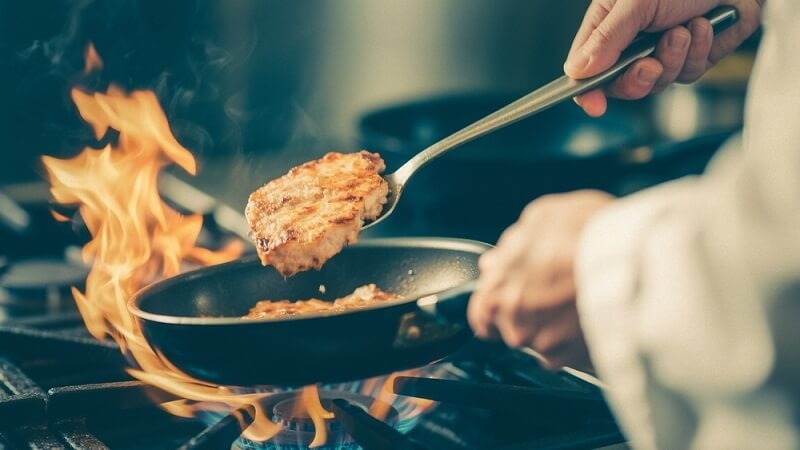
Pan searing techniques help create bold flavor, crisp texture, and rich color on meat and fish. Many cooks ask how to sear meat and get a perfect crust on a steak without special tools. This skillet searing guide explains simple searing tips and why high-heat cooking makes food taste better and look beautiful, too.
Chefs in restaurants rely on this technique because it allows them to develop flavors quickly. Heating meat alters its surface, creating a crust that helps retain its juices. When done correctly, pan searing is one of the methods that can turn ordinary food into something special.
Pan searing techniques work because of a natural reaction called the Maillard reaction. Heat changes proteins and sugars, which creates new flavors and a brown color. This crust is not just pretty; it tastes deeper and richer.
High-heat cooking is important here. Without enough heat, meat turns gray and soft instead of brown and crisp. A hot pan gives a fast surface change, while the inside stays juicy.
Benefits of proper searing include
This is why chefs depend on skillet searing guide methods every day.
The pan makes a big difference in pan-searing techniques. Heavy pans hold heat better and cook evenly.
Nonstick pans are less ideal. They cannot handle very high heat for safe cooking, and the crust may not form well.
A heavy skillet helps achieve a perfect crust on steak by keeping the heat steady as the meat touches the pan.
Preparation matters as much as heat. Many people skip this step and lose quality.
Water blocks browning. Always pat meat dry with a paper towel. Dry surface allows proper contact with heat.
Salt improves flavor and crust. It can be added
Both work in pan-searing techniques.
Cold meat cools the pan. Let the meat rest outside the fridge for 15 to 20 minutes. This helps with even cooking.
These simple searing tips improve results quickly.
Heat control decides success or failure. Too low heat causes steaming. Too high heat burns food.
Signs of a ready pan include
Oil should be added after the pan heats.
Good oils for pan-searing techniques include
These oils tolerate high-heat cooking without burning fast.
This skillet searing guide helps beginners cook with confidence.
Place an empty pan on medium-high heat for several minutes.
Add a small amount of oil and allow it to heat.
Lay meat away from the body to avoid splashes.
Do not move meat too early. Movement prevents crust from forming.
Flip only after the crust forms. Meat releases naturally when ready.
Rest the meat for 5 to 10 minutes. This keeps juices inside.
This process supports pan-searing techniques and improves flavor.
A perfect crust steak requires attention to detail. Small changes give big results.
Thin meat overcooks before the crust forms. Thick steak works better.
Crowding lowers heat. Always cook one or two pieces at a time.
Gentle pressure improves contact. Better contact improves crust.
One flip is enough. Constant flipping prevents crust.
These searing tips help achieve the perfect crust on steak at home.
Mistakes happen often, especially early.
Cold pan leads to gray meat. Always preheat the pan.
Too much oil fries the meat rather than searing it.
Patience matters. Wait for the crust.
Resting keeps meat juicy.
Avoiding these mistakes improves pan-searing techniques fast.
Pan searing techniques work on more than steak. Many foods benefit.
Chicken gets crispy skin and juicy inside.
Fish develops a delicate crust and better texture.
Pork gains deep flavor and rich color.
Vegetables become sweet and caramelized.
This skillet searing guide applies widely.
Oil choice affects taste and safety.
Best oils include
Avoid butter alone at the start. Butter burns fast. Butter can be added later for flavor.
This improves pan-searing techniques and protects food.
Professional kitchens follow simple rules.
Important searing tips include
Consistency builds skill.
Even beginners improve quickly using these pan-searing techniques.
Practice builds confidence. Start with affordable cuts first.
Pay attention to
Experience teaches timing better than recipes.
This skillet searing guide becomes easier over time.
Resting finishes cooking gently. Heat moves inside meat during rest.
Without rest
With rest
Resting is a key part of pan-searing techniques.
Restaurants rely on high-heat cooking for speed and quality. Fast browning saves time and builds flavor.
Commercial kitchens use heavy pans and strong burners. Home kitchens can still achieve similar results with proper skillet searing methods.
Simple tools and correct heat make the biggest difference.
Pan searing methods can be used to make delicious, juicy, and beautiful dishes. With proper heat, a dry surface, and a little patience, the results can be greatly improved. Anyone can learn how to sear meat with practice. Follow these steps, use the skillet searing guide, and enjoy perfectly crusty steak every time, with confidence and pride.
Oils with high smoke points, like avocado, canola, and grapeseed, work best. They handle high-heat cooking safely and help create a proper crust.
Meat should cook until a crust forms and releases naturally. This usually takes two to four minutes, depending on thickness.
Most common reasons include a wet surface, low heat, or an overcrowded pan. Dry meat and proper heat fix this problem.
Yes. Anyone can learn using simple searing tips, a proper pan, and patience. Practice improves results quickly and builds confidence.
This content was created by AI